
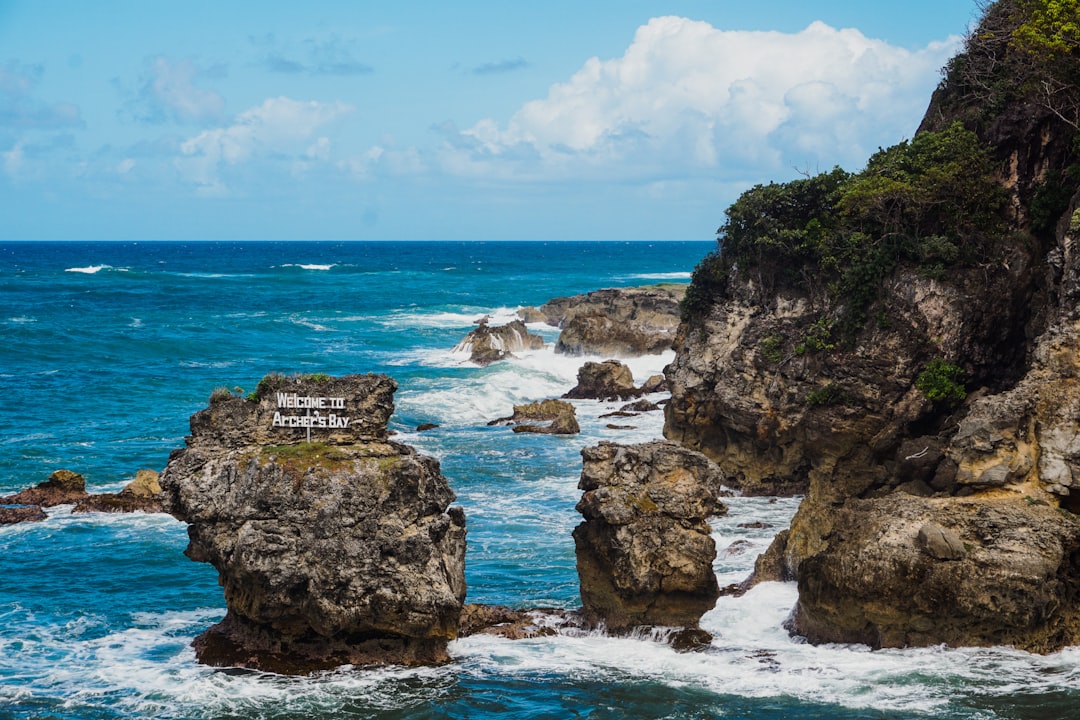
Barbados punches well above its size when it comes to visual drama. Within a single day you can photograph rugged Atlantic cliffs, calm turquoise Caribbean bays, lush tropical gullies, and centuries-old plantation great houses. Whether you shoot on a smartphone or carry professional kit, the island rewards those who take the time to explore beyond the resort pool. Here is an honest, locally-informed guide to the Barbados Instagram spots that genuinely deliver.
Bottom Bay: The Island’s Most Striking Cove
If you only have time for one photography location away from the main tourist strips, make it Bottom Bay. Tucked into the south-east coast, the cove is enclosed by tall coral cliffs draped in sea grape trees, with a handful of wind-bent palms leaning toward the water at angles that look almost too cinematic to be real. The sand is a fine, pale white, and the Atlantic keeps the water a vivid shade of blue-green that shifts with the light throughout the day.
The walk down to the beach is short but steep, which keeps it quieter than the south coast beaches. Arrive early in the morning or in the last hour of daylight for the best combination of soft light and fewer people in frame.
Bathsheba and the East Coast: Wild Atlantic Drama
The east coast of Barbados is completely different in character from the sheltered Caribbean side, and it is every bit as photogenic. Bathsheba is the star of the show: enormous mushroom-shaped boulders rise from the surf of the Soup Bowl, one of the Caribbean’s most famous surf breaks. The scale of the scene is surprisingly hard to capture on a phone camera alone. Wide-angle shots from the hillside above the bay show the boulders and breaking swell in context, while closer shots among the rocks convey the raw power of the Atlantic.
The road running north from Bathsheba toward Cattlewash passes through a series of lookout points where the coastline stretches into the distance without a single building in sight. These are among the best Barbados Instagram spots for dramatic landscape photography.
Animal Flower Cave: Natural Architecture at the Island’s Tip
At the very north of the island, Animal Flower Cave is cut into limestone cliffs right at sea level. The cave itself is lined with coral formations and small tidal pools, but the real draw for photographers is the series of natural arched windows looking directly out to the Atlantic. Framing a shot through one of those arches, with the ocean filling the background and the cool blue light of the cave in the foreground, produces results that look like a production still from a nature documentary.
The clifftop above the cave offers a secondary photography opportunity: the northern coastline stretches east and west in both directions with no visible development, a rare sight on an island this popular.
Carlisle Bay: Underwater Photography and Turquoise Shallows
Carlisle Bay, just south of Bridgetown, is home to several shallow shipwrecks that draw snorkellers and divers who want to photograph marine life. Above the surface, the bay is a clean sweep of calm water with the capital’s low skyline visible in the distance. The colours are typically at their best in the mid-morning hours before the sea breeze picks up.
The small jetty at the eastern end of the bay is a favourite spot for shots of wooden fishing boats tied up in a line, with the water reflecting green and blue beneath them. It has a working, unpolished quality that makes a nice counterpoint to the manicured resort beaches.
The Bridgetown Careenage: History and Colour
The Careenage in the heart of Bridgetown is the island’s historic inner harbour, where trading schooners once docked after months at sea. Today it is lined with brightly painted colonial buildings reflected in the still water, with pedestrian bridges crossing the channel at several points. The angle looking west from the Charles O’Neal Bridge at golden hour, with the sun picking up the colours of the facades, is one of the most reproduced images in Barbadian travel photography.
The streets immediately around the Careenage in the UNESCO-listed Garrison area are also worth exploring with a camera. Chattel houses in pink, yellow, and mint green are set against a backdrop of mahogany trees and old military buildings.
St. Nicholas Abbey: The Plantation That Looks Like a Film Set
St. Nicholas Abbey in the north-east parish of St. Peter is one of the oldest intact plantation great houses in the Western Hemisphere, dating to around 1658. The building is Jacobean in style, with distinctive curved Dutch gables rising above manicured lawns and an avenue of mahogany trees. It is, frankly, one of the most beautiful man-made structures on the island, and one of the least visited by casual tourists.
The combination of formal gardens, heritage architecture, and working rum distillery makes this one of the most varied Barbados Instagram spots for people who want something beyond beach imagery. A small train takes visitors through the sugar cane fields, and the views from the hilltop back across the parish are well worth the walk.
Farley Hill National Park: Romantic Ruins on a Hilltop
Farley Hill, near the Scotland District in the north, features the crumbling ruins of a 19th-century plantation mansion surrounded by a dense grove of imported hardwoods. The roofless shell of the great house frames views across the Atlantic coast below, and the contrast of the dark stone walls against the bright sky and tropical vegetation makes for images with real atmosphere. It feels slightly forgotten in the best possible way, and it rarely gets crowded.
Welchman Hall Gully: Tropical Greenery and Wild Ferns
For a completely different palette, Welchman Hall Gully in the centre of the island is a steep ravine filled with towering bamboo, wild orchids, breadfruit trees, and the occasional green monkey. The light inside the gully is filtered and dappled, and the scale of the vegetation is genuinely impressive. If you have been photographing beaches all week, an hour in here produces images that look like they come from an entirely different destination.
Paynes Bay: Calm Water and Resident Turtles
Paynes Bay on the west coast sits in the heart of the Platinum Coast and offers the quintessential Caribbean beach photograph: calm, glassy water in a spectrum of blues, a sandy floor visible even in the deeper sections, and hawksbill turtles that surface to breathe a few metres from the shore. Early morning is the best time to photograph the bay before the catamaran tours arrive.
Barbados rewards photographers who leave the poolside. The island has a compressed geography that means world-class Barbados Instagram spots are rarely more than 20 minutes from each other by car, and the light in the Caribbean is forgiving at almost any hour. For a locally curated map of all these locations and more, download the Xplore Barbados app at xplorebarbados.com and explore the island with confidence.