
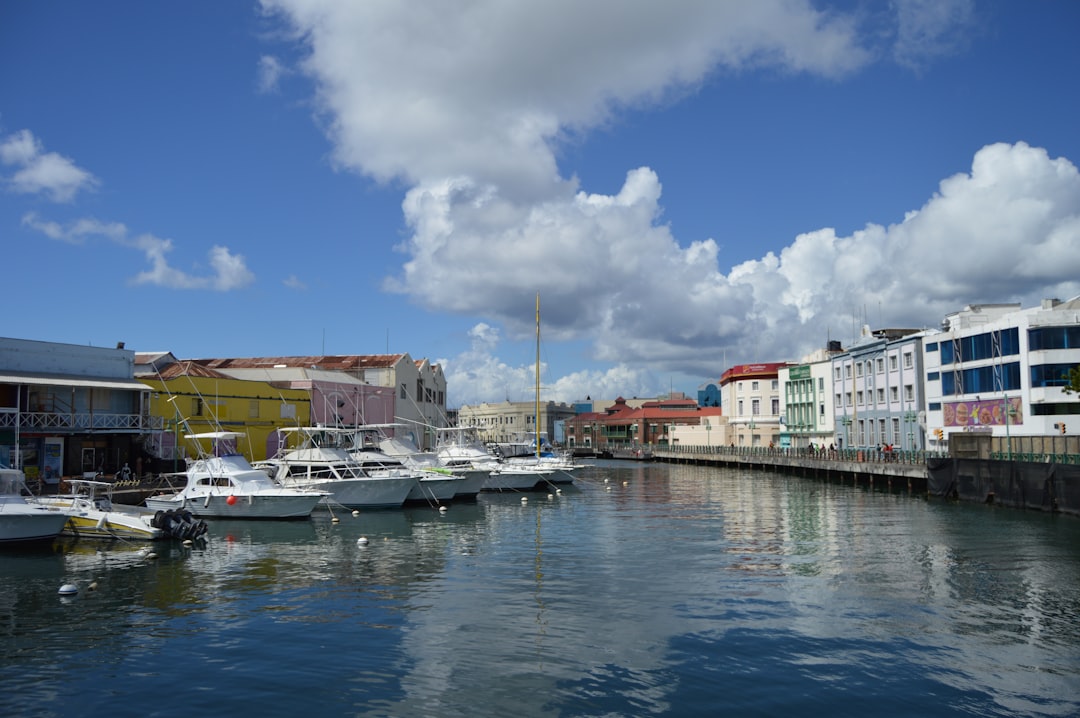
Bridgetown is one of those places that rewards the curious traveller. It is not a theme-park version of the Caribbean. It is a real, breathing city with history on every corner, a working harbour, a buzzing street food scene, and a warmth that you feel within minutes of stepping off the bus. Whether you have a half-day to spare or want to truly understand the island you have come to visit, this Bridgetown Barbados guide will point you in all the right directions.
A City Built on History
Few Caribbean capitals carry the historical weight that Bridgetown does. Founded in 1628 by English settlers, the city grew into one of the most important trading hubs in the entire Atlantic world. At its peak, ships from Britain, West Africa, and the Americas all passed through its harbour, making Bridgetown a crossroads of commerce, culture, and the transatlantic slave trade.
That history is impossible to ignore and, rightly, it should not be. The National Heroes Square, formerly Trafalgar Square, still features a statue of Admiral Nelson but also sits adjacent to a growing number of monuments and markers that reflect Barbados’s fuller story. Walking through Bridgetown is like reading a book that is still being written. Old colonial buildings stand beside modern government offices, rum shops sit a few doors down from jewellers, and everywhere you turn, people are simply getting on with their day in that easy Bajan way.
UNESCO Status and What It Actually Means for Visitors
In 2011, Historic Bridgetown and its Garrison were inscribed as a UNESCO World Heritage Site. This is not just a badge on a tourism brochure. The designation covers the historic city centre and the nearby Garrison area, which includes Garrison Savannah and a remarkable collection of Georgian military buildings, many of which are still in active use today.
For visitors, the UNESCO status means you are walking through streets and past buildings that are considered irreplaceable on a global scale. The Parliament Buildings, which date to the mid-1800s and remain the seat of the Barbados government, are among the most photogenic spots in the city. The neo-Gothic architecture feels entirely unexpected in the tropics, and that contrast is exactly what makes any Bridgetown Barbados guide worth reading in the first place.
The Careenage: The Heart of the City
If there is one spot that captures the soul of Bridgetown, it is the Careenage. This inner harbour is where sailing vessels were once hauled ashore and repaired, and today it is lined with colourful boats, waterfront restaurants, and a promenade that fills up with locals and visitors alike as the afternoon cools off.
The two bridges spanning the Careenage, the Chamberlain Bridge and the Charles Duncan O’Neal Bridge, both offer excellent vantage points for photography. Sit on the waterfront steps, order something cold from one of the nearby vendors, and watch the comings and goings of a capital city at work and at rest. It is the kind of scene that needs no filter.
Exploring the Streets: What to Look For
The best way to use any Bridgetown Barbados guide is simply to get walking. The city centre is compact enough to cover on foot in a few hours. Head through Broad Street, the main commercial artery, and you will pass duty-free shops, old rum merchants, and a mix of architecture that spans four centuries.
Do not miss St Michael’s Cathedral, which has been rebuilt multiple times since the original structure was erected in 1665. The churchyard is shaded and quiet, making it a good spot to pause mid-morning before the city gets busy.
The Fairchild Street Market and the Cheapside Market are where you see Bridgetown operating as a real community rather than a tourist attraction. Vendors sell ground provisions, fresh fish, spices, and local fruits. Even if you are not buying, the colour and the noise of a Bajan market is worth experiencing for its own sake.
Eating and Drinking Like a Local
Bridgetown is a great place to eat well. The rum shops scattered through the back streets are as much social institutions as they are bars. Step into one for a Banks beer or a rum and ginger and you will likely end up in conversation within minutes.
For food, look for the flying fish cutter: a fried or steamed flying fish fillet stuffed into a salt bread roll with mustard and pepper sauce. It is the quintessential Bajan street food, and some of the best versions in the country can be found from vendors near the bus terminal and around the market areas.
If you want a more relaxed sit-down experience, the restaurants along the Careenage waterfront serve everything from fresh catch to international cuisine. Lunchtime in Bridgetown is a serious affair. Locals eat well, and the spots they favour tend to fill up quickly after midday, so it is worth arriving a little early.
Shopping in Bridgetown
Bridgetown is the best place on the island to shop for duty-free goods, particularly if you have arrived by cruise ship. The Cruise Terminal connects directly into the city and leads into a well-organised retail area. But step past the obvious tourist strip and you will find far more interesting options.
Pelican Village, a craft market just outside the main terminal, has a good range of local artisan work including pottery, woodcarvings, and batik fabrics. For rum, the Cave Shepherd department store on Broad Street stocks every major local label. Picking up a bottle of Mount Gay Extra Old or a St Nicholas Abbey single blend is one of the better souvenirs you can bring home.
Getting Your Bearings
Bridgetown is the island’s main transport hub. The bus terminals at Fairchild Street for the south and east, and Princess Alice Highway for the north and west, connect every part of Barbados. Government blue buses and ZR minibuses both run frequently, and fares are very affordable. If you are travelling independently around the island, Bridgetown is where you will change buses for almost every cross-island journey.
Taxis are also available throughout the city, particularly at the Cruise Terminal and near the main waterfront hotels. It is always worth agreeing on a fare before you set off, and a good Bridgetown Barbados guide will always tell you the same thing.
Making the Most of Your Time
Bridgetown rewards those who slow down. It is easy to rush through the main sights in two hours and feel like you have seen it all. But the city opens up properly when you wander off-script. Follow the side streets. Look up at the wooden facades that survive among the concrete buildings. Stop into a rum shop. Ask a local where they eat lunch.
For a deeper look at everything Bridgetown and the wider island has to offer, the Xplore Barbados app at xplorebarbados.com is the best local companion you can have on your phone. It brings together the top activities, restaurants, and experiences across Barbados, all curated with the kind of on-the-ground knowledge that takes years to build.