
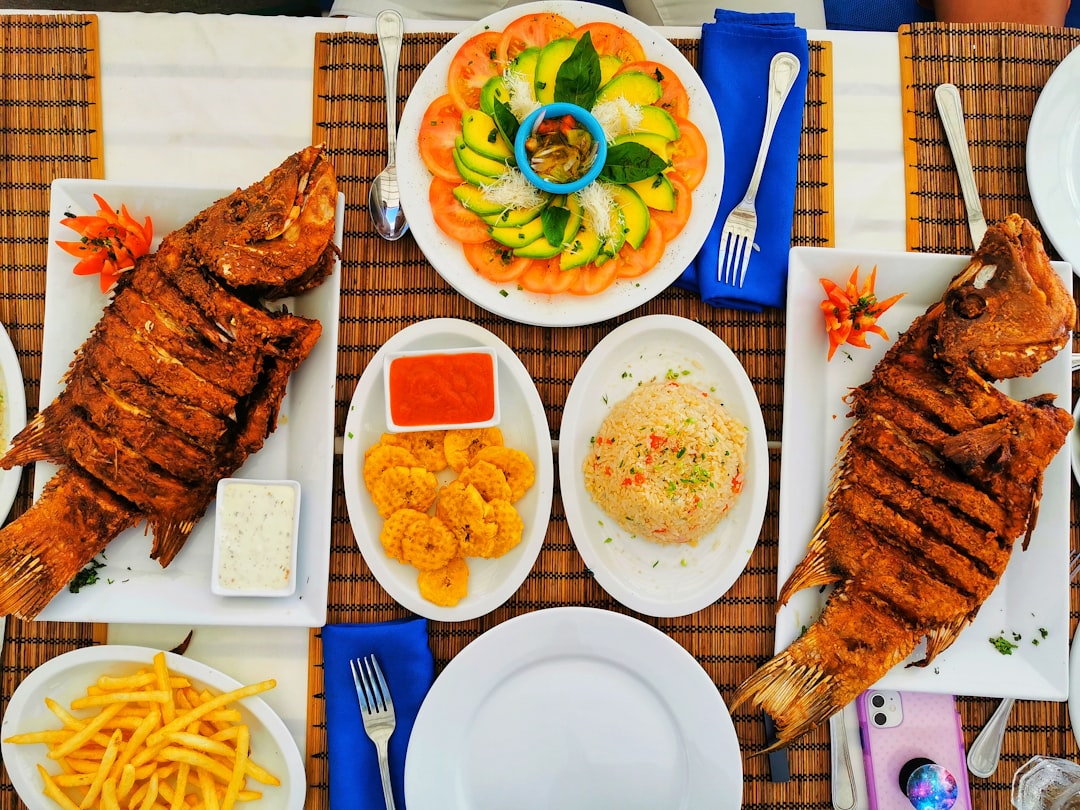
If there is one thing that will surprise you about Barbados, it is just how seriously Bajans take their food. This is not a place where local cuisine plays second fiddle to beach bars and rum cocktails. The food here has soul, history, and serious flavour, and if you spend your whole trip eating at hotel buffets, you are genuinely missing out.
From the national dish served in homes and rum shops alike to the weekly ritual of the fish fry, knowing what to eat in Barbados before you arrive means you will waste zero time figuring it out when you get here.
Start with the National Dish: Cou-Cou and Flying Fish
No food conversation about Barbados begins anywhere other than cou-cou and flying fish. This is the national dish, the culinary heartbeat of the island, and something every visitor should try at least once.
Cou-cou is a smooth, firm polenta made from cornmeal and okra, cooked together until thick and set. On its own it might sound unassuming, but paired with flying fish it becomes something much greater than the sum of its parts. The flying fish is typically steamed or pan-fried and served in a light Creole sauce built from tomatoes, onion, sweet peppers, garlic, thyme, and a touch of heat.
Flying fish are deeply tied to Bajan identity. These small silver fish leap above the Atlantic waters around the island, and Barbados is sometimes nicknamed the Land of the Flying Fish. The best places to try this dish are not the tourist restaurants along the west coast but rather the rum shops, local lunch spots, and canteens where Bajans eat it themselves.
The Friday Night Ritual: Oistins Fish Fry
If you are on the island on a Friday night, there is only one place to be: the Oistins Fish Fry on the south coast. This weekly open-air market and food gathering is one of the most atmospheric food experiences in the Caribbean.
Vendors fire up grills loaded with mahi-mahi, marlin, swordfish, snapper, and flying fish. You pick your fish, choose your sides, and settle in at a plastic table with a rum punch or a cold Banks Beer while the sound systems warm up and the crowd gathers.
The sides are just as important as the fish. Ask for macaroni pie, rice and peas, coleslaw, fried plantain, and steamed vegetables alongside your main. Everything is seasoned generously and cooked to order. This is not a tourist trap; this is where local families, workers, visitors, and Bajan expats returning home all share the same tables on a Friday night.
Macaroni Pie: The Side Dish That Demands Attention
You will encounter macaroni pie at nearly every local meal in Barbados and, once you have tried it, you will understand why. Unlike a loose, saucy mac and cheese, Bajan macaroni pie is baked firm enough to be sliced like a portion of lasagne. It is rich, well-seasoned with local herbs and Bajan seasoning, and has a golden crust on top.
It appears as a side dish at Sunday lunches, fish fry events, church gatherings, and lunch counters across the island. Some versions add ketchup to the sauce, some use evaporated milk, and every family has their own variation. If you are eating at a local establishment and it comes with your plate, consider it a gift.
Pudding and Souse: A Saturday Morning Tradition
Saturday morning in Barbados means one thing to many locals: pudding and souse. This is perhaps the most culturally specific dish on the island, and one that rewards adventurous eaters.
Souse is a pickled pork dish made from the less glamorous cuts of the pig, including the head, feet, and ears, marinated in lime juice, onion, cucumber, and fresh herbs to create a bright, acidic, deeply flavoured cold preparation. Pudding is steamed sweet potato seasoned with herbs and spices and packed into a sausage casing.
The combination sounds unusual to newcomers but is beloved by Bajans, and the Saturday morning ritual of queuing for it at local rum shops and bakeries is a genuine piece of island culture. It is worth trying with an open mind.
Breadfruit: A Versatile Staple
Breadfruit is one of the great unsung stars of Bajan cooking. This large, starchy fruit grows abundantly across the island and appears in meals throughout the day. It can be roasted whole over coals until the skin chars and the inside becomes soft and fluffy, sliced and fried into chips, boiled and mashed, or added to soups and stews.
Roasted breadfruit eaten warm with a little butter or alongside grilled fish is one of the simple pleasures of eating in Barbados. You will find it at roadside stalls, in rum shops, and prepared by vendors at the fish fry.
Rum Punch and Banks Beer: The Drinks That Go With Everything
No Barbados food guide is complete without addressing what to drink. Rum punch is the island’s unofficial signature cocktail, and there is even a local saying that captures the classic recipe: one of sour (lime juice), two of sweet (sugar syrup), three of strong (rum), and four of weak (water or fruit juice). Most bars follow this formula, though proportions shift and local rums vary from vendor to vendor.
Mount Gay and Cockspur are two of the island’s most celebrated rum brands, and a rum punch made with either makes for a fine companion to a plate of grilled fish.
Banks Beer is the local lager, brewed on the island, and it is refreshing and perfectly suited to the heat. For something non-alcoholic, fresh coconut water sold from roadside vendors is cold, hydrating, and tastes as it should: like it came directly from the source.
Sweet Endings: Coconut Bread and Tamarind Balls
Bajan baked goods deserve a mention. Coconut bread is a sweet, dense loaf sold at bakeries across the island and is one of those things you buy once and then find yourself thinking about for the rest of the trip. Salt bread, a fluffy round roll with a slightly crispy exterior, is eaten at breakfast stuffed with cheese or fish cakes.
Fish cakes themselves are a Bajan snack classic: seasoned salted cod mixed into a spiced batter and deep-fried into small rounds. They are sold at bakeries, rum shops, and market stalls, and they are best eaten hot.
For something sweet, look out for tamarind balls: small rounds of tamarind paste rolled in sugar with a balance of sharp, sweet, and salty that is completely addictive.
Eating Like a Local
The best advice for eating well in Barbados is to follow the locals. Rum shops are not just drinking establishments; they serve food, and the lunch plates coming out of a rum shop kitchen are often the most flavourful and affordable meals on the island. Cheapside Market in Bridgetown is worth visiting for fresh produce, local snacks, and the chance to see how Bajans actually shop.
Knowing what to eat in Barbados means you arrive with a list of must-tries rather than ending up defaulting to international options. The food here is a genuine expression of Bajan culture, history, and pride, and it deserves your full attention.
For a curated guide to the best local restaurants, food spots, and Friday night fish fry vendors on the island, download the Xplore Barbados app at xplorebarbados.com. Whether you are hunting for the best cou-cou and flying fish or want to know which rum shop does the finest macaroni pie, it is the local guide worth having in your pocket.